
What Does Deep TMS Treat?
Using patented H-Coil technology, BrainsWay Deep TMS safely stimulates deeper and broader regions of the brain than traditional TMS—with no systemic medication side effects, no anesthesia, and no downtime. It is FDA-cleared to treat:
Major Depressive Disorder (MDD)
Proven relief for adults living with depression (including late-life depression).
Anxious Depression
The only TMS system FDA-cleared to reduce comorbid anxiety symptoms in adult patients with depression.
Obsessive-Compulsive Disorder (OCD)
Deep, non-invasive adjunct stimulation designed to quiet intrusive thoughts and compulsive behaviors.
Are You a Candidate for Deep TMS?
Under FDA clearance guidelines, BrainsWay Deep TMS is indicated for adults with Major Depressive Disorder who have not achieved satisfactory improvement from prior antidepressant medication in their current episode.
Most major insurance plans cover Deep TMS when you meet the following criteria:
Medication History
You have tried 2 or more antidepressant medications (in the current or prior episodes, depending on your plan) that did not provide enough or full relief.
Medication Intolerability
Or, you experienced difficult side effects and intolerability to psychiatric medications that prevented you from continuing treatment.
Talk Therapy
You have tried evidence-based psychotherapy without achieving full relief from your symptoms.
Safety Screening
You have no non-removable metallic implants in or near the head (such as aneurysm clips, cochlear implants, or deep brain stimulators) and no history of uncontrolled seizures.
Real-World Response & Remission Rates
Clinical trials and large-scale real-world data involving over 1,000 patients show that BrainsWay Deep TMS delivers meaningful, lasting relief—even when medications and therapy fall short:
Roughly 3 out of 4 patients experience a clinically significant reduction (50% or greater) in their depressive symptoms.
More than 1 in 2 patients achieve full remission—meaning their symptoms are nearly or completely gone after completing a standard 30-session treatment course.
Studies show that over 80% of patients who respond to Deep TMS maintain their improvements months after completing treatment.
We accept most major carriers and confirm your approval before your first session.
Breakthrough Mental Health Care, Right Here in Michiana
FDA-Cleared BrainsWay Deep TMS™ for Depression, Anxious Depression, and OCD—led by a physician who has called our community home for 25 years.
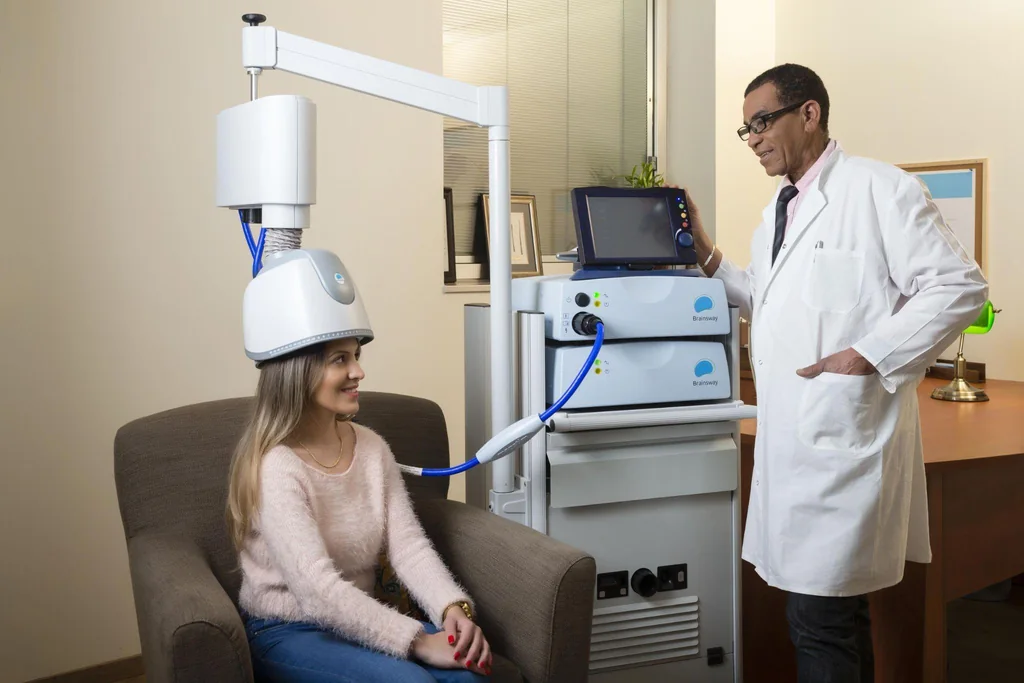
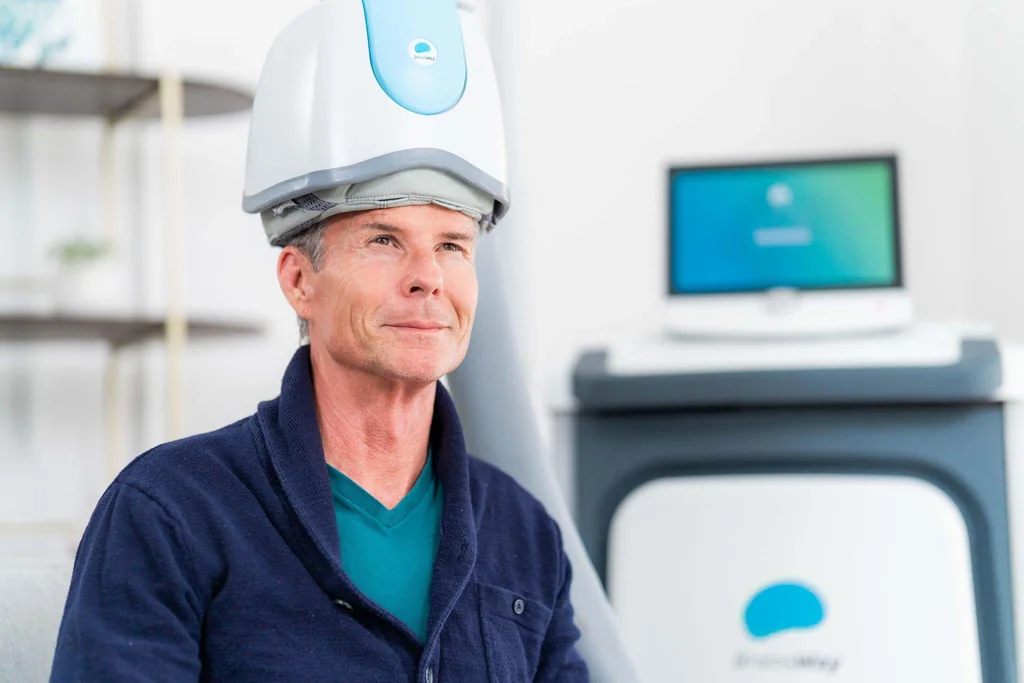
Deep Transcranial Magnetic Stimulation (Deep TMS) by BrainsWay is an advanced, FDA-approved treatment that brings renewed hope to individuals living with depression, anxiety, and OCD. Using patented magnetic coils, Deep TMS safely stimulates deeper and broader regions of the brain than traditional TMS.
Dr. Majid Malik brought this therapy to the Michiana community after seeing firsthand how few advanced mental health treatment options were available locally. His mission is to ensure individuals and families have access to compassionate, effective care — without having to leave home to find it.
Call or text our team at (574) 387-6260
Why choose Deep TMS?
FDA-Approved
BrainsWay Deep TMS is FDA-cleared for treatment of depression, anxiety, and OCD.
Non-Invasive
A non-invasive, medication-free treatment that uses magnetic fields to stimulate brain regions.
For Treatment-Resistant Cases
Designed for individuals who have not found relief through medication alone.
Clinically Proven
Backed by extensive clinical research demonstrating lasting improvement in symptoms.
Inside the brain, region by region
Drag to turn the brain, then pull it apart to see the regions underneath. Hover or tap any region for a short description. The regions each of our two coils targets are colour-coded and named below.
- H1 coil · Light blue · treats MDD (major depressive disorder)
- H7 coil · Yellow · treats comorbid OCD and Major Depression
- Other regions, shown for orientation
Each coil is colour-coded above and named in every label, so the colour is never the only cue.
Choose a region above, or tap one on the model, to read about it.
What makes Deep TMS different
Four things set the treatment we deliver apart from standard TMS. They work together rather than separately, and your clinician will walk through each of them with you at consultation.
Deep and broad
Standard TMS stimulates a small area close to the surface of the brain. The H-coils we use are shaped to carry their magnetic field deeper beneath the scalp and spread it across a wider area, so more of the network involved in your symptoms is reached in a single session rather than just the patch directly under the coil.
FDA cleared for the conditions we treat
Deep TMS is FDA-cleared for major depressive disorder (MDD) and for obsessive-compulsive disorder (OCD) — the two conditions our coils are built to treat. We hold the H1 coil for MDD and the H7 coil for comorbid OCD and Major Depression, and we only offer treatment for what those two coils cover.
Targeting brain circuits
Mood and compulsion do not live at a single point in the brain. They run across connected circuits, which is why treatment is aimed at a network rather than one spot. The model above shows the regions each of our coils reaches — pull it apart and the depth the field has to travel becomes easier to picture.
A choice of protocols
Alongside the standard course set out below, we offer an accelerated protocol for MDD that condenses treatment into a shorter calendar. Which one suits you depends on your symptoms and what your weeks can accommodate, and it is a decision you make with your clinician.
Designed for those seeking relief
Deep TMS is an option worth exploring if you or a loved one is living with:
Want to learn more about Deep TMS?
We encourage you to explore Brainsway.com (opens in a new tab) for additional information, educational resources, and helpful insights into Deep TMS technology and how it works. Understanding your treatment options is an important step toward taking charge of your mental health.
Visit BrainsWay → (opens in a new tab)36 sessions, 20 minutes each
The standard protocol is 36 20-minute treatments. Patients are normally in and out of the office within 25-30 minutes, aside from the first appointment which is 60-90 minutes to include mapping.
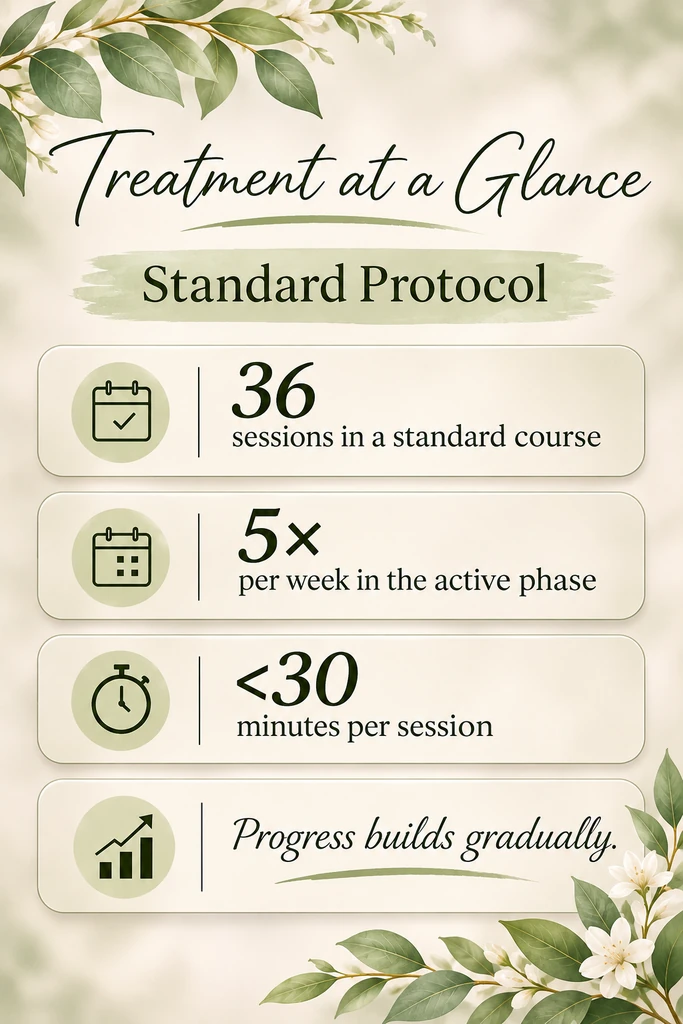
- Course length
- 36 sessions.
- Session length
- 20 minutes each.
- First visit
- 60 to 90 minutes, including mapping.
Two weeks, five sessions a day
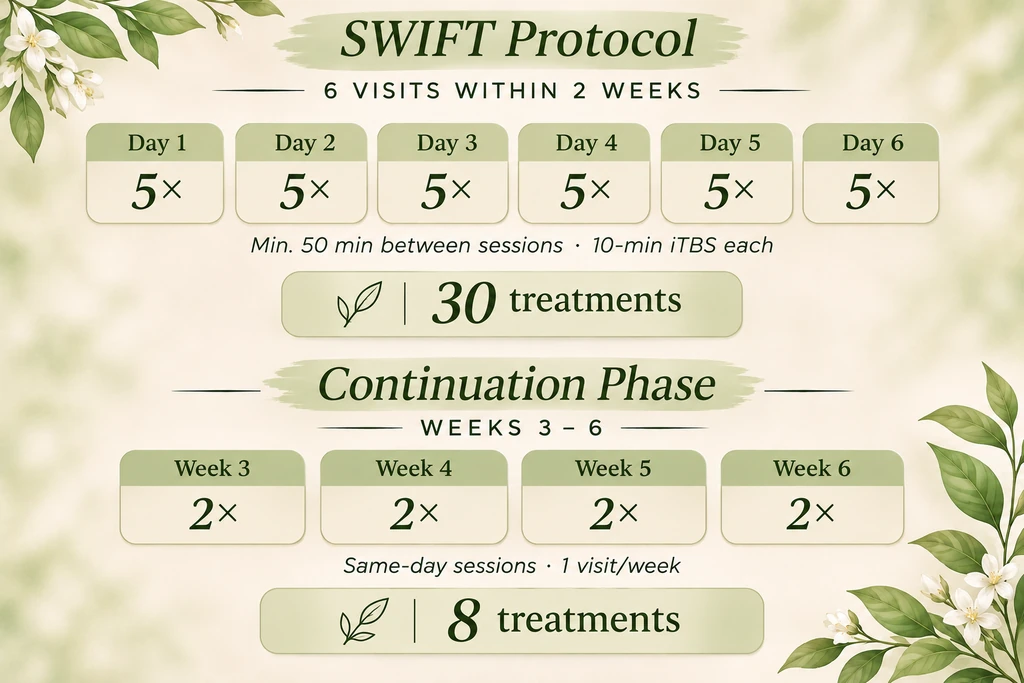
For those patients in need of a more expedited course of treatment, the FDA approved SWIFT protocol is available. This course of treatment occurs primarily over a 2 week period with 6 days of 5 treatments per day. This concludes with 4 weeks of once a week/ 2 treatments per day.
- Course length
- 2 weeks, then 4 weeks of continuation.
- Sessions
- 6 days of 5 treatments per day, then once a week with 2 treatments.
Private pay option available
While not all insurance providers offer coverage for the SWIFT protocol, it is available as a private pay option.
Ask our TMS coordinator whether SWIFT or the standard course suits you better.
What to expect
Consultation
Receive a complimentary consultation with our TMS Patient Care Coordinator to complete the required screening information and address any questions. The insurance verification of TMS benefits begins here to assure maximum affordability.
Meet our experienced clinical team
A thorough initial intake evaluation will be completed with a licensed therapist, followed by a consultation with a board-certified psychiatrist. A personalized treatment plan and insurance approval will be completed prior to initiating treatment.
Mapping
During the initial mapping appointment, treatment settings will be personalized to achieve the most optimal outcome. Immediately following mapping, the first treatment begins.
Treatment
Relax during a 20-minute treatment. After your session, you will immediately be able to resume your daily routine.
How Deep TMS Compares
When depression hasn't improved with treatment, understanding your options can help you take the next step with confidence. Each approach offers different benefits, and the right choice depends on your symptoms, treatment history, and individual needs.
Antidepressant medication
Medication helps many people manage depression, but some continue to experience symptoms or find side effects difficult to tolerate. When medication hasn't provided enough relief, TMS offers another treatment option.
Ketamine and esketamine (Spravato)
These treatments can provide rapid relief for some people, sometimes within hours. Repeated treatments may be needed to maintain improvement. Standard TMS typically works more gradually over several weeks. Your provider can help you understand which approach may best fit your needs.
Electroconvulsive therapy (ECT)
ECT is a highly effective treatment that can be especially valuable for severe depression or when a rapid response is needed. It requires anesthesia and can cause confusion and memory difficulties. TMS is performed while you are awake, requires no anesthesia, and generally has fewer cognitive side effects.
Tolerability and side effects
TMS is generally well tolerated. The most common side effects include scalp discomfort and mild headaches, which often improve as treatment continues. Your care team will review the benefits and risks with you and help you make an informed decision.
Who should not have Deep TMS
Absolute contraindications for TMS include:
- Metal or electronic implants in the head or neck
- Cochlear implants
Patients with the following conditions require further evaluation:
- Pacemakers, defibrillators, or other implanted devices
- History of seizure or family history of epilepsy
- Retinal detachment
Patients with the following conditions should talk to their provider to better understand if TMS is the next best step:
- Active suicidal ideation
- Active psychosis
- Pregnancy
- Recent or active substance abuse history
Ready to Find Out If You Qualify? We Verify Benefits.
Most major insurance plans cover Deep TMS, and you don’t have to navigate the paperwork alone. Call or message Brittany or Rose today at (574) 387-6260
We verify your insurance benefits quickly and confidentially, walk you through eligibility, and answer all your questions.
- United Healthcare
- Optum
- Cigna
- Medicare
- Indiana Medicaid
- Tricare East
- Humana
- Humana Military
- Anthem/Blue Cross Blue Shield
- Aetna
- Meritain Health
- First Health
- Zing Health
No covered insurance? Cash-pay options are available.
If your plan isn't listed, or you would rather not use insurance at all, we offer cash-pay options. Call us and we'll walk you through the cost before you commit to anything.
Call (574) 387-6260Coverage varies by plan. We'll verify your specific benefits before your first treatment.
Could Deep TMS be a fit for you?
Deep TMS is for people with treatment-resistant depression — those who have tried other routes and are still struggling. These three questions reflect that definition.
Your answers are not saved and not sent anywhere. Nothing you select here leaves your browser.
Answer all 3 questions to see what they suggest. 0 of 3 answered.
This is general guidance only. It is not a diagnosis, and it is not a determination of eligibility or insurance coverage — only a clinician can make those after an evaluation.
TMS Pre-Screening Form
Not sure whether you are a candidate? Complete the short pre-screening form before your consultation — it gives our TMS coordinator a head start on your file.
Request a Free Consultation
Tell us how to reach you and our TMS coordinator will call to answer your questions and walk you through next steps. There's no cost and no obligation.
We use your details only to contact you about your consultation. We never share them with anyone else.
Refer a Patient for Deep TMS
Clinicians can refer a patient to us for Deep TMS evaluation. We’ll contact your office first to confirm the referral.
Frequently asked questions
Ready to break through?
Take the first step toward relief. Call us to schedule a consultation and find out if Deep TMS therapy is right for you.